
India's Hydraulic Infrastructure Design Standards Need a Reset
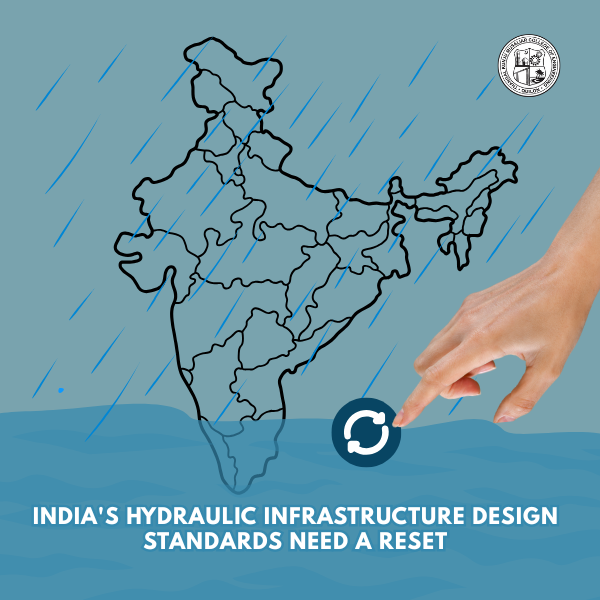
The rising global climate crisis needs action now. We must review all foundations of our national infrastructure.
For decades, our hydraulic infrastructure design standards assumed a stable climate. This stability does not exist anymore.
TKM College of Engineering’s new research proves that this old assumption is wrong. It demands urgent national focus.
We must revise hydraulic design standards as per Kerala's climate change lessons to secure our future. This blog outlines the necessary methodology shift.
This research gives a clear roadmap for national resilience. It details the crucial findings for engineers and policymakers.
The Foundational Flaw: Why Historical Data Fails Us Now
The major problem in hydraulic infrastructure design standards is a false belief. Designers assume the climate will never change. They think the weather stays the same forever. This principle assumes future rainfall and flood events will strictly mirror historical data.
This assumption is scientifically obsolete. Climate change intensifies extreme weather events globally. Hydrological variables are now demonstrating "non-stationarity."
Non-stationarity means a variable’s statistical properties are constantly changing over time. Relying on the outdated historical hydrologic data assumption risks massive infrastructure failure. Engineers must recognize this shift immediately.
Current hydraulic infrastructure design standards are simply built for a past climate. This leaves critical assets like dams and bridges exposed to premature failure. This risk is unacceptable for public safety and national development.
The TKM College of Engineering study proves this must change. This research gives the main reason for the necessary switch. TKMCE's expertise directly addresses this professional pain point for senior engineers and policymakers. Our recent findings highlight the severity of this issue.
Read about how recent weather events prove this risk. UAE’s record rainfall and India’s scorching heat expose the climate crisis further. They also highlight this urgent vulnerability. The hydraulic infrastructure design standards of yesterday cannot protect the nation tomorrow.
TKMCE's Call for Non-Stationarity: A New Mandate for Kerala
Dr. Adarsh S and Mrs. Meera G. Mohan led this vital research. They worked under the respected ANRF Core Research Grant (CRG).
Their work shows a great need. We must revise hydraulic design standards as per Kerala's climate change results. This is their main focus now. This is truly groundbreaking work for water security in India.
The team ran an intense extreme rainfall frequency analysis in Kerala. They proved that the 2018 flood events now happen much more often. A study warns that 2018-scale floods may hit every 25 years in Kerala.
This data gives the mandate to fix the old rules. We must revise hydraulic design standards as per Kerala's climate change data immediately. This means replacing old methods with non-stationary models.
The goal is to overhaul all hydraulic infrastructure design standards. The new models must be site-specific and ready for climate change. This work supports the main goal. That goal is Beyond Brick and Mortar: Civil Engineering That Saves Lives. It helps Civil Engineering save people.
Students must see the importance of this work. It shows how TKMCE drives the future of Civil Engineering research. We must adopt these new hydraulic infrastructure design standards for national resilience.
Also read: 2018-Scale Floods May Hit Every 25 Years In Kerala, Warns Study
From Risk to Resilience: Integrating Advanced Hydrologic Design
We must shift from static design assumptions. The new method uses hydrologic design standards for non-stationarity.
This method changes how engineers approach design flood estimation. Engineers must now use climate forecasts to predict future rainfall intensity.
Implementing these new hydraulic infrastructure design standards is the only way forward. This creates truly climate-resilient infrastructure in India.
TKMCE research provides these crucial models. These models help projects move past simple, reactive fixes. They build proactive, long-term resilience.
Adopting the new hydraulic infrastructure design standards creates sustainable water management systems. Read more about Engineering Ideas to Combat Climate Change and UV Exposure right here. This research makes climate-resilient infrastructure in India possible.
A Roadmap for Tomorrow's Engineers and Policymakers
This study helps the whole nation. It gives a clear plan to revise hydraulic design standards as per Kerala's climate change. Policymakers must use this new data right away.
They must update Kerala’s current flood models. This protects water security in India.
For our students, this work defines the future. The Scope of Civil Engineering in India in 2025 now centers on climate adaptation.
Work on hydraulic infrastructure design standards is now about leading the climate fight. It ensures the safety of key national assets. This is a very important career path for new engineers.
TKMCE gives students these essential skills. We help students face this big challenge. We teach them how to revise hydraulic design standards as per Kerala's climate change results. They learn to fix the rules. This ensures a sustainable future for our country.
Frequently Asked Questions (FAQ)
1. What are the main limitations of Kerala’s current flood models?
Kerala’s current flood models use old data. They assume the climate is stable.
These limits fail to plan for extreme rain. They lead to underestimated design capacities.
2. How does TKMCE’s research specifically address design flood estimation?
TKMCE research introduces hydrologic design standards and non-stationarity methods. This moves past historical averages.
The new approach uses future climate projections for design flood estimation. It makes hydraulic structures much stronger.
3. Why is it essential to revise hydraulic design standards as per Kerala's climate change lessons?
Kerala clearly shows the need to revise hydraulic design standards as per Kerala's climate change lessons. The state proves that non-stationarity is real.
These lessons create a blueprint for climate-resilient infrastructure in India. We can use site-specific data nationwide.
4. What is the role of the ANRF Core Research Grant (CRG) in this study?
The ANRF Core Research Grant (CRG) paid for this important study.
This grant highlights the national value of the work.
This funding ensures the research is solid and credible. It supports the revision of hydraulic infrastructure design standards.
Conclusion
The science is now very clear. The time for static hydraulic infrastructure design standards is over forever. TKM College research provides the crucial non-stationarity modeling method.
This shift helps us build climate-resilient infrastructure in India. It is more than an engineering update; it is an issue of public safety and economics.
Adopting these new hydraulic infrastructure design standards secures our water assets. We must protect the people they serve. We practice these principles ourselves on the path to a net-zero emission campus.
We invite industry professionals to explore the full findings of this ANRF-backed study. You can discuss collaborations to integrate these models into your projects.
Contact the TKMCE research center for consultancy on regional climate-proofing. Explore opportunities in the Civil Engineering Department’s Hydro-Climatology Research Lab.